From Coal to Clean: The Impact of the Green New Deal on Energy Policy
As countries transition away from coal, the Green New Deal is providing a roadmap for a cleaner energy future. New reports show how revised energy policies are not only cutting emissions but are also economically viable. Dive into how these strategies are not just dreams but reality, reshaping energy landscapes.
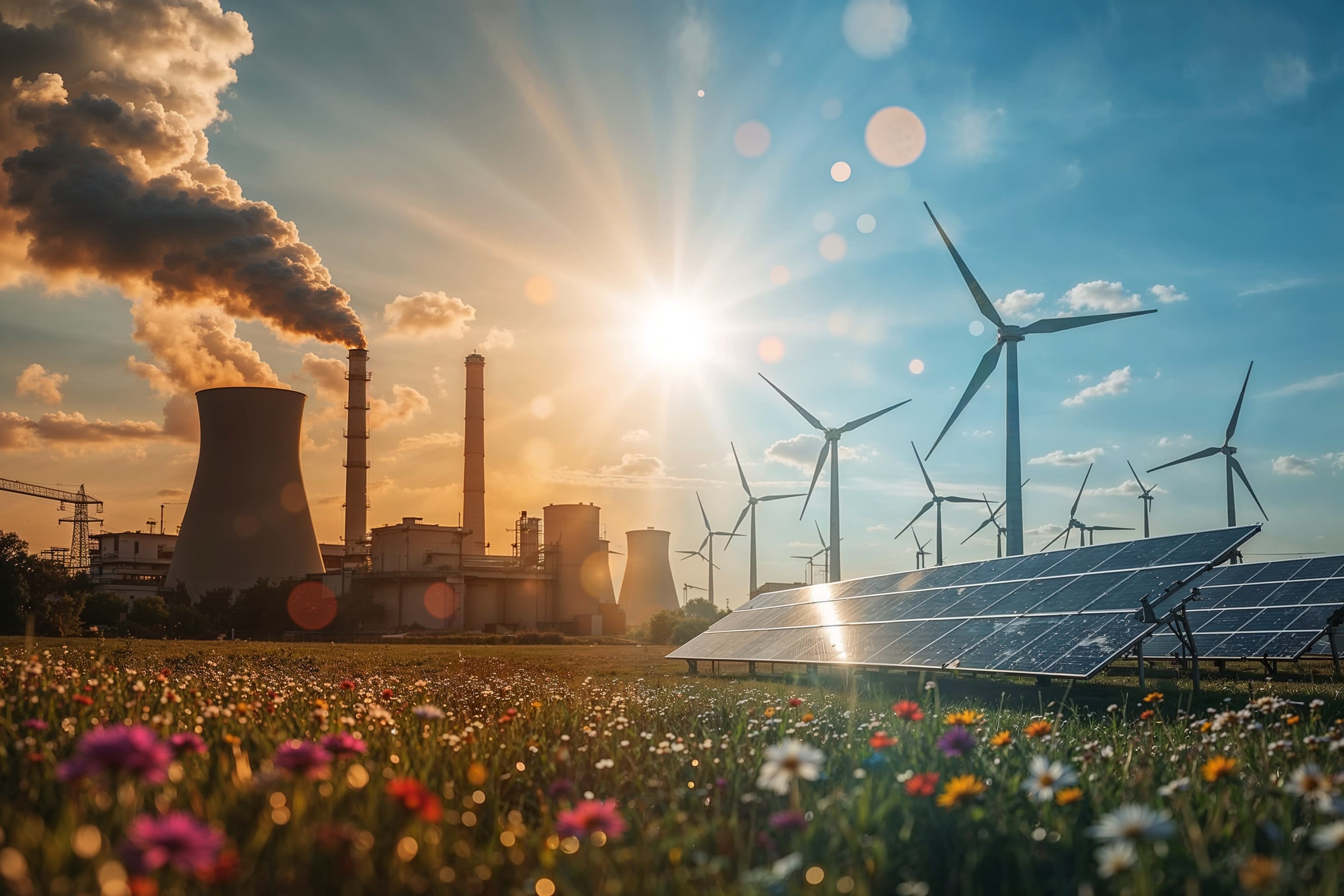
Summary
The Green New Deal has emerged as a transformative framework guiding nations away from coal dependency toward a sustainable energy future. This ambitious initiative not only aims to reduce greenhouse gas emissions but also seeks to stimulate economic growth through investments in renewable energy and infrastructure. Recent developments underscore the feasibility of these strategies, demonstrating that the transition to clean energy is both environmentally imperative and economically advantageous.
The Green New Deal: Vision and Objectives
1. Achieving Net-Zero Greenhouse Gas Emissions
A central objective of the GND is to attain net-zero greenhouse gas emissions through a fair and just transition for all communities and workers. This involves:
- Transitioning to 100% clean, renewable, and zero-emission energy sources.
- Upgrading infrastructure to eliminate pollution and greenhouse gas emissions as much as technologically feasible.
- Overhauling transportation systems to remove pollution and greenhouse gas emissions from the transportation sector.
2. Creating High-Wage Jobs and Ensuring Economic Security
The GND emphasizes the creation of millions of good, high-wage jobs to ensure prosperity and economic security for all people of the United States. This includes:
- Investing in the infrastructure and industry of the United States to sustainably meet the challenges of the 21st century.
- Spurring massive growth in clean manufacturing and removing pollution and greenhouse gas emissions from manufacturing and industry.
- Supporting family farming and investing in sustainable farming and land use practices.
3. Securing Clean Air and Water, Healthy Food, and a Sustainable Environment
The GND aims to secure for all people of the United States for generations to come:
- Clean air and water.
- Climate and community resiliency.
- Healthy food.
- Access to nature.
- A sustainable environment.
4. Promoting Justice and Equity
A foundational aspect of the GND is promoting justice and equity by stopping current, preventing future, and repairing historic oppression of frontline and vulnerable communities. This involves:
- Building resiliency against climate change-related disasters, such as extreme weather, including by leveraging funding and providing investments for community-defined projects and strategies.
- Cleaning up existing hazardous waste and abandoned sites, ensuring economic development and sustainability on those sites.
- Restoring and protecting threatened, endangered, and fragile ecosystems through locally appropriate and science-based projects that enhance biodiversity and support climate resiliency.
In recent years, elements of the GND have been reflected in various legislative and executive actions. For instance, the Inflation Reduction Act, enacted in 2022, allocated substantial funding towards clean energy initiatives, aiming to reduce greenhouse gas emissions and promote renewable energy sources. Additionally, the establishment of the American Climate Corps in 2023 seeks to mobilize a workforce dedicated to climate change mitigation and adaptation efforts.
While the GND itself has not been passed as a comprehensive package, its vision continues to influence policy discussions and initiatives aimed at addressing climate change and promoting economic equity in the United States.
Policy Measures Driving the Transition from Coal
Internationally, the Powering Past Coal Alliance (PPCA) exemplifies collaborative efforts to phase out coal. As of 2025, the PPCA comprises 186 countries, cities, regions, and organizations committed to ending the use of unabated coal power. Notably, countries like Belgium, Austria, Sweden, and the United Kingdom have successfully closed their last coal plants, setting a precedent for others to follow.
In Europe, the Just Transition Mechanism (JTM) has been pivotal in supporting regions heavily dependent on coal. With a budget of at least €100 billion for 2021-2027, the JTM focuses on economic diversification, employment generation, and social cohesion to mitigate the socio-economic impacts of the energy transition. This approach ensures that communities historically reliant on coal are not left behind.
Despite these efforts, challenges persist. Global coal consumption remains high, with projections for 2024 indicating levels similar to 2023, around 8.7 billion tonnes. This underscores the need for sustained policy interventions and international cooperation to achieve a comprehensive transition away from coal.
In summary, the transition from coal is driven by a combination of national policies, international alliances, and dedicated funding mechanisms. While progress is evident, continued commitment and innovative policy measures are essential to fully realize a clean energy future.
Economic Impacts and Job Creation in the Clean Energy Sector
Surge in Investments and Job Creation
Between August 2022 and August 2024, 338 major clean energy projects were announced, totaling $162 billion in private capital investments. These initiatives are projected to create or support over 621,000 jobs, including 467,000 construction jobs annually during the construction phase and an additional 154,000 jobs each year once operational. The construction phase alone is expected to add $237.5 billion to the nation's GDP, surpassing the annual contribution of the U.S. telecommunications sector. Once these projects are operational, they are anticipated to contribute an additional $20.4 billion annually to the GDP.
Manufacturing Renaissance
The IRA has spurred a manufacturing renaissance, with plans to build or expand over 160 domestic manufacturing facilities. These developments are expected to create more than 100,000 new manufacturing jobs nationwide. Notably, 44% of these facilities are already online or under construction. This surge in manufacturing is a testament to the robust demand for clean energy technologies and the favorable policy environment.
Sector-Specific Growth
The solar energy sector has experienced remarkable growth, with 42 gigawatts (GW) of new renewable power-generating capacity added to the U.S. grid in 2023, driven mainly by robust solar additions. Additionally, 7.5 GW of battery storage capacity was commissioned in the U.S. in 2023, setting a new record for the country. The electric vehicle (EV) market has also seen significant expansion, with EV sales in the U.S. surging 50% to nearly 1.46 million vehicles sold in 2023.
Offshore Wind Projects and Economic Impact
Offshore wind projects are contributing significantly to job creation and economic growth. For instance, the Sunrise Wind project, a 924 MW offshore wind farm under construction off the coast of Long Island, New York, is projected to create at least 800 direct construction jobs and thousands more indirect and induced jobs through investments in the local economy. The project is expected to generate over $6 billion in economic benefits over its 25-year lifespan.
Challenges Amid Policy Uncertainty
Despite these positive trends, the clean energy sector faces challenges due to policy uncertainty. In 2025, over $14 billion in U.S. clean energy investments were canceled or delayed, with policy uncertainty arising from proposed tax legislation that threatens to weaken clean energy tax credits established under the IRA. These setbacks have contributed to the loss of approximately 10,000 clean energy jobs.
Global Context and Competition
Internationally, countries like China are making substantial investments in clean energy. In 2024, China invested approximately $940 billion in clean energy, nearing the scale of global fossil fuel investments. This underscores the competitive landscape and the need for the U.S. to maintain robust support for its clean energy sector to remain a global leader.
In summary, the clean energy sector has become a cornerstone of economic growth and job creation in the United States. While the industry has achieved significant milestones, maintaining this momentum requires stable and supportive policies to ensure continued investment and employment opportunities.
Case Studies: Successful Implementations of Clean Energy Policies
Texas's Renewable Energy Surge
In March 2023, Texas achieved a significant milestone by generating more electricity from solar power than from coal for the first time. By mid-May, the state set a new U.S. record for solar energy generation, surpassing California. This rapid growth was facilitated by Texas's efficient "connect and manage" model for integrating new renewable projects, which has become a benchmark for federal initiatives. The economic benefits have been substantial, with rural counties receiving over 60% of the expected tens of billions of dollars in clean energy investments.
Rhode Island's Community Energy Initiatives
Rhode Island has implemented several community-focused clean energy projects. The Town of Lincoln replaced all its streetlights with energy-efficient LEDs, resulting in significant energy and cost savings, and improved safety and visibility throughout town streets. This project is expected to save the town just over $2 million over the life of the equipment. Additionally, Jamestown Public Schools installed solar arrays that offset 84% of the district's electricity consumption, making it the first in the state to achieve this renewable energy benchmark. These initiatives not only reduce energy costs but also promote sustainability within the community.
Denmark's Wind Energy Cooperatives
Denmark has pioneered community-driven wind energy projects through local cooperatives. Nearly 50% of all wind turbines in Denmark are owned by these cooperatives, allowing residents to invest in and profit from renewable energy. This model has significantly reduced reliance on fossil fuels and generated substantial income for local economies. As of 2020, over 47% of Denmark's total electricity consumption was sourced from wind power, demonstrating the effectiveness of community engagement in driving renewable energy adoption.
Germany's Energiewende Movement
Germany's Energiewende, or "energy transition," emphasizes renewable energy and sustainability through a decentralized governance structure that empowers local communities. As of 2021, approximately 50% of Germany's electricity was generated from renewable sources, primarily wind and solar energy. Over 1,000 renewable energy cooperatives have been established, collectively producing more than 10% of the country's electricity. This participatory approach fosters a sense of ownership and commitment to renewable energy goals.
South Australia's Battery Storage Solutions
In response to grid instability and blackouts, South Australia partnered with Tesla in 2017 to install the world's largest lithium-ion battery energy storage system. This 100 MW system has improved grid stability, reduced the risk of blackouts, and facilitated the integration of renewable energy sources by storing excess energy and releasing it during periods of high demand. The project has also provided economic benefits, including job creation and attracting further investments in the renewable energy sector.
These case studies illustrate that successful clean energy policies often involve a combination of community engagement, innovative technology, and supportive regulatory frameworks. By learning from these examples, other regions can develop tailored strategies to effectively transition to renewable energy sources.
Challenges and Criticisms of the Green New Deal
Economic Feasibility and Cost Implications
One of the primary criticisms centers on the economic viability of the GND. The American Action Forum estimated that achieving the GND's ambitious goals could cost households over $2,500 annually in electricity-related expenses, with the overall price tag reaching trillions of dollars. Critics argue that such expenditures could strain the economy and disproportionately affect low-income families.
Impact on Traditional Energy Sectors and Employment
The GND's push for a rapid transition to renewable energy raises concerns about job losses in traditional energy industries. The AFL-CIO, representing numerous labor unions, criticized the GND as "not achievable or realistic," expressing apprehension over potential threats to their members' jobs and standard of living. They emphasized the need for a transition that doesn't leave workers behind.
Exclusion of Nuclear Energy
Another point of contention is the GND's general exclusion of nuclear power, America's largest source of carbon-free energy. Some environmentalists and energy experts argue that dismissing nuclear energy could hinder efforts to reduce greenhouse gas emissions effectively. They point out that premature closures of nuclear plants have previously led to increased emissions, as seen in Vermont and Pennsylvania.
Technical Challenges and Infrastructure Requirements
The reliance on renewable sources like wind and solar introduces challenges related to energy intermittency and storage. Wind and solar power are typically available only about 30% of the time, necessitating significant advancements in energy storage solutions. Additionally, integrating these renewable sources into the existing grid requires extensive infrastructure upgrades, including the construction of new transmission lines to connect remote renewable energy sites to urban centers.
Political and Social Considerations
The GND's broad scope, encompassing not just environmental but also social and economic reforms, has been viewed by some as overly ambitious and politically divisive. Even within the renewable energy sector, there are concerns that the GND's expansive agenda could complicate efforts to build consensus and implement effective policies.
In summary, while the Green New Deal aims to address climate change comprehensively, it faces significant challenges related to economic feasibility, potential job displacement, exclusion of certain energy sources, technical hurdles, and political divisiveness. Addressing these concerns is crucial for the successful implementation of the GND's objectives.
Future Outlook: Scaling Up Renewable Energy Initiatives
Policy Developments and Their Impact
Recent legislative actions have introduced both opportunities and uncertainties for renewable energy initiatives. In May 2025, the U.S. House of Representatives passed a tax and spending bill proposing substantial cuts to clean energy tax credits established under the 2022 Inflation Reduction Act. Analyses suggest that if enacted, this bill could halve the projected growth of electricity generation capacity through 2035, significantly slowing the expansion of solar, wind, and battery storage projects. Additionally, over $14 billion in U.S. clean energy investments have been canceled or delayed in 2025, with approximately 10,000 clean energy jobs affected. These developments underscore the critical role of stable policy support in sustaining the momentum of renewable energy expansion.
Technological Innovations Enhancing Grid Integration
Advancements in technology are playing a pivotal role in integrating renewable energy sources into the power grid more effectively. The convergence of artificial intelligence (AI), big data, and the Internet of Things (IoT) is optimizing energy management and enhancing grid stability. AI-driven predictive analytics help preempt system failures, while IoT sensors provide real-time insights into energy output and efficiency. These innovations are crucial for managing the intermittent nature of renewable energy and ensuring a reliable power supply.
Global Trends in Renewable Energy Adoption
Internationally, countries are making significant strides in renewable energy adoption. India, traditionally reliant on coal, added a record 30 gigawatts of clean energy in the fiscal year ending April 2025, enough to power 18 million homes. This progress is driven by the decreasing cost of solar power, which is now half as expensive as new coal power. With nearly 170 gigawatts of renewable energy projects in the pipeline, India is on track to reach its ambitious goal of 500 gigawatts by 2030. However, challenges such as grid integration and infrastructure expansion remain critical to sustaining this growth.
Community-Driven Renewable Energy Projects
Community solar initiatives are gaining traction, offering renewable energy access to those unable to install solar panels on their property. In the United States, as of December 2023, approximately 7.3 gigawatts of community solar were in operation across 44 states. These projects enable broader participation in the clean energy transition, allowing renters, apartment dwellers, and low-income households to benefit from solar energy without requiring rooftop installations. The expansion of community solar represents a vital step toward inclusivity and energy equity.
The Role of Offshore Wind in Energy Expansion
Offshore wind energy is poised for rapid expansion, with countries worldwide prioritizing the development of offshore wind farms. In the United States, projects along the East Coast and the Gulf of Mexico are progressing significantly, aligning with the goal of deploying 30 gigawatts of offshore wind by 2030. Advancements in turbine technology and increased investment are driving costs down, making offshore wind a more attractive option for renewable energy generation.
The future of renewable energy initiatives is shaped by a complex interplay of policy decisions, technological advancements, and global trends. While challenges such as policy uncertainty and infrastructure development persist, the sector continues to innovate and expand, driven by the imperative to transition to a more sustainable and resilient energy system.
Comments
Post a Comment