Community-Led Initiatives Complementing the Green New Deal Goals
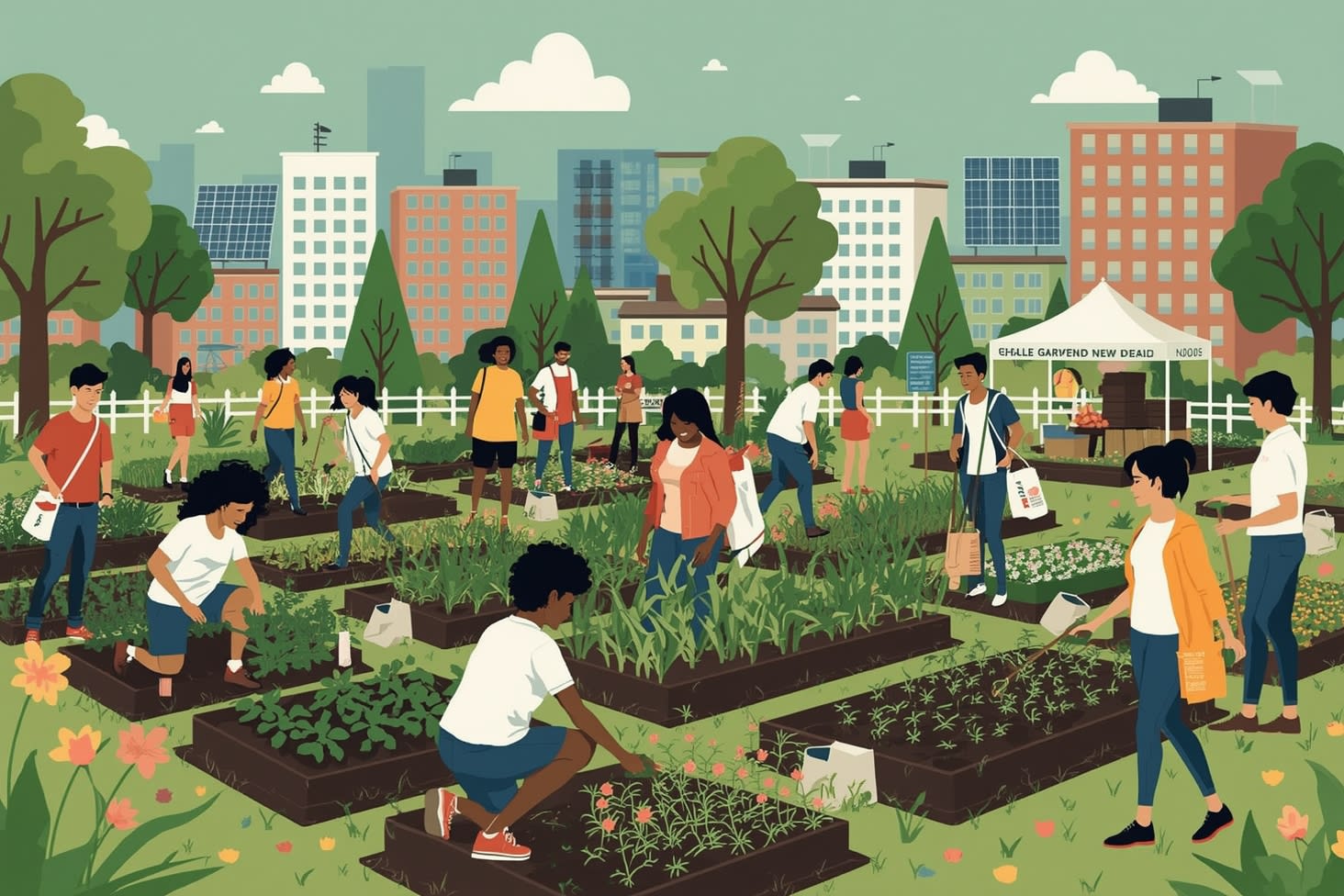
Grassroots movements are showing that local communities are key allies in achieving the goals set forth in the Green New Deal. Farmers' cooperatives, urban gardening projects, and community-owned solar farms are just a few examples of how people are taking the initiative to make a difference. Discover how these efforts complement larger legislative goals.
Summary
Local communities are stepping up to address climate change, aligning their efforts with the ambitious goals of the Green New Deal. From farmers' cooperatives to urban gardening projects and community-owned solar farms, grassroots initiatives are demonstrating that meaningful environmental action often begins at the local level. These community-led projects not only contribute to reducing carbon emissions but also foster social equity and economic resilience. By examining these initiatives, we can see how localized efforts complement and enhance broader legislative goals, showcasing the power of collective action in the fight against climate change.
The Role of Farmers' Cooperatives in Sustainable Agriculture
Enhancing Economic Resilience
By uniting farmers, cooperatives can negotiate better prices for inputs like seeds and fertilizers, reducing individual costs. They also facilitate collective marketing strategies, allowing farmers to access larger markets and secure fair prices for their produce. For instance, the Oromia Coffee Farmers' Cooperative Union in Ethiopia has successfully connected smallholder farmers directly with international markets, increasing their income and reducing reliance on intermediaries.
Promoting Sustainable Practices
Cooperatives often prioritize sustainable farming methods, providing education and resources to implement practices such as crop diversification, organic farming, and soil conservation. In Cambodia, cooperatives have been instrumental in training farmers on climate-smart practices, helping them adapt to unpredictable rainfall and soil degradation. This approach not only improves yields but also ensures long-term environmental sustainability.
Facilitating Access to Resources and Support
Membership in a cooperative can grant farmers access to financial services, technical assistance, and infrastructure development. In the United States, Organic Valley, a cooperative of organic farmers, provides its members with support ranging from marketing to research on sustainable farming techniques. This comprehensive support system empowers farmers to adopt and maintain sustainable practices.
Building Community and Social Capital
Beyond economic and environmental benefits, cooperatives foster a sense of community among farmers. They create platforms for sharing experiences, challenges, and solutions, strengthening social ties and collective problem-solving. This communal approach is essential for the widespread adoption of sustainable agriculture practices.
Challenges and Opportunities
While cooperatives offer numerous advantages, they also face challenges such as limited access to capital, market competition, and the need for effective management structures. However, with appropriate policy support, capacity-building initiatives, and investment in cooperative development, these challenges can be addressed, unlocking the full potential of cooperatives in promoting sustainable agriculture.
In summary, farmers' cooperatives play a crucial role in advancing sustainable agriculture by enhancing economic resilience, promoting environmentally friendly practices, facilitating access to resources, and building community. Their contributions align closely with the objectives of the Green New Deal, making them essential partners in the transition toward a more sustainable and equitable agricultural system.
Urban Gardening Projects: Greening Cities and Empowering Communities
Embracing Wild Gardening
A notable trend gaining momentum is "wild gardening," which encourages a shift from meticulously manicured spaces to more natural, self-sustaining environments. This approach reduces maintenance efforts and supports local biodiversity by allowing plants to grow freely, creating habitats for pollinators and other wildlife. Garden designers like Bart Haverkamp and Pieter Croes advocate for this method, emphasizing minimal intervention to let nature take its course.
Innovative Urban Farming Models
Cities are also witnessing the rise of "agrihoods," residential communities centered around working farms. Agritopia in Gilbert, Arizona, exemplifies this model by integrating a 11-acre organic farm within a suburban neighborhood. Residents enjoy the benefits of locally grown produce and communal green spaces, promoting sustainability and a strong sense of community. However, it's essential to consider that such developments may cater to higher-income groups and could contribute to gentrification.
Community-Led Gardening Initiatives
Community gardens continue to play a pivotal role in urban areas. In Houston, the Westbury Community Garden underwent significant renovations to enhance food security and provide educational opportunities. Volunteers engaged in tasks like planting new fruit trees and improving garden infrastructure, demonstrating the power of collective action in addressing local needs.
Educational and Youth Engagement Programs
Organizations like Keep Growing Detroit are empowering communities through urban agriculture. By offering educational programs and resources, they enable residents to cultivate their own food, fostering self-sufficiency and strengthening community bonds. Their initiatives address food insecurity and promote sustainable practices, illustrating the multifaceted benefits of urban gardening.
These developments underscore the growing recognition of urban gardening as a vital component of sustainable city living. By integrating green spaces into urban environments, cities can enhance food security, promote environmental stewardship, and build stronger, more connected communities.
Community-Owned Solar Farms: Democratizing Renewable Energy
Understanding Community-Owned Solar Farms
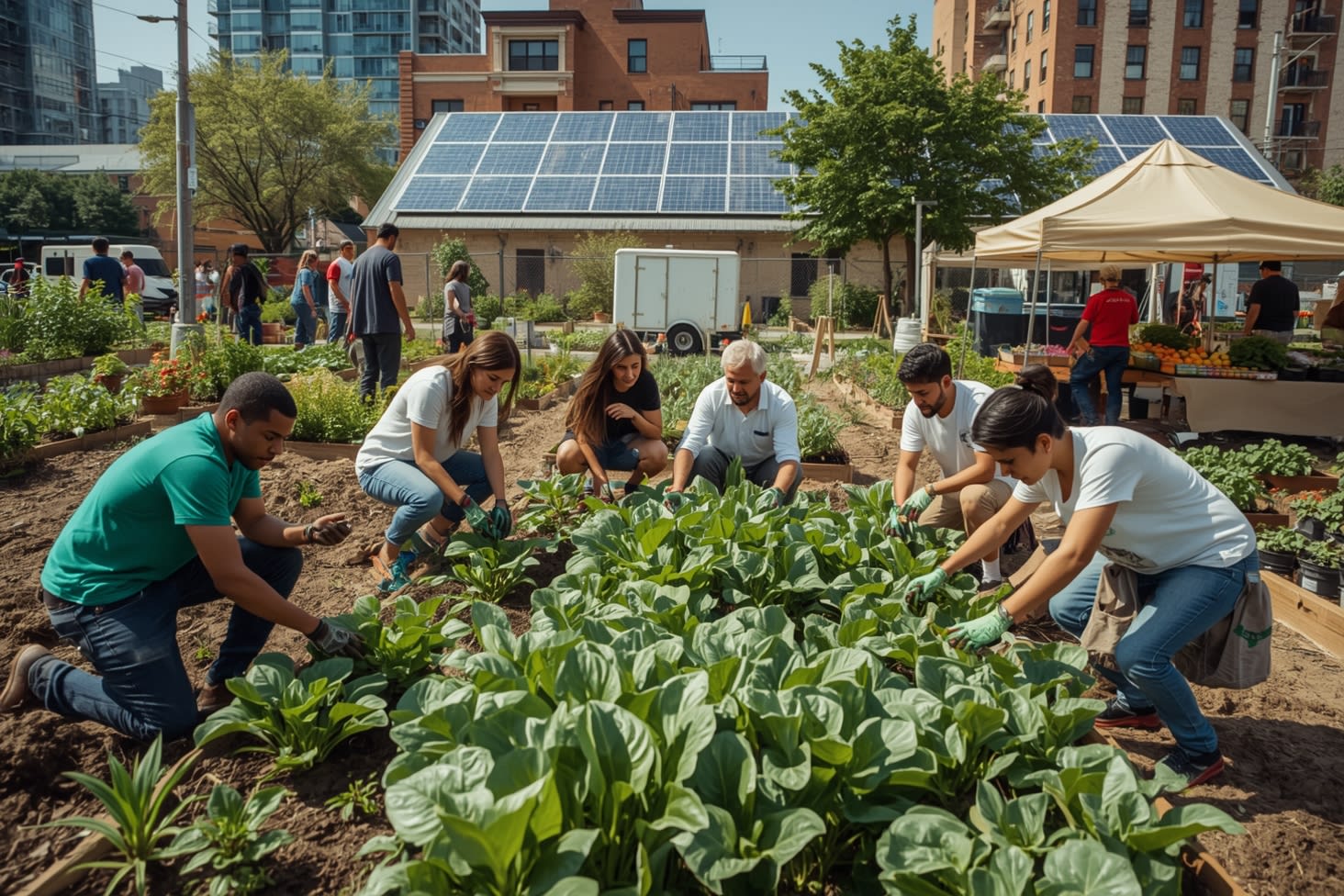
Community solar projects, often referred to as solar gardens or farms, are shared solar energy systems that allow multiple participants to benefit from a single, large-scale installation. Participants can purchase or lease a portion of the solar array and receive credits on their electricity bills proportional to their share of the energy produced. This model is particularly advantageous for renters, homeowners with unsuitable roofs, and individuals who cannot afford the upfront costs of personal solar installations.
Recent Developments and Legislative Support
In April 2024, President Joe Biden announced a significant investment of $7 billion in federal grants aimed at expanding residential solar projects, targeting 900,000 low- and middle-income households. This initiative, part of the Environmental Protection Agency's Solar for All program, seeks to reduce emissions and provide substantial savings on electricity bills for participating families.
States have also been proactive in supporting community solar. For instance, in 2024, Virginia expanded shared solar access by 150 MW for Dominion Energy customers and established a new 50 MW program in Appalachian Power territory. Similarly, Colorado modernized its community solar program, enabling a new dispatchable distributed generation program.
Overcoming Challenges
Despite the benefits, community solar projects face several challenges:
- Regulatory Hurdles: Complex regulations and lengthy approval processes can delay project implementation. For example, in Pine Bush, New York, a community solar project was withdrawn after the local utility estimated a $20 million connection fee, highlighting the financial and bureaucratic obstacles developers can encounter.
- Utility Resistance: Some utilities view community solar as competition, fearing it may disrupt their business models. This resistance can manifest in substantial interconnection fees and prolonged approval times.
- Financing and Upfront Costs: Securing funding for community-owned projects can be daunting, especially for marginalized communities. However, innovative models like cooperative ownership have emerged to address these financial barriers. For example, Cooperative Energy Futures in Minnesota has installed 6.9 MW of low-income accessible community solar through a for-profit cooperative model, distributing profits to members and reinvesting in community benefits.
Success Stories
Several community-owned solar projects have demonstrated the potential of this model:
- Boardman Hill Solar Farm in Vermont: Established in 2015, this 150 kW community solar project is entirely member-owned and democratically managed. It has been recognized for its commitment to local ownership and environmental excellence.
- Lexington Community Solar Farm in Massachusetts: Serving over 130 households, this project has reduced electricity bills by an average of 15% and prevented 1,500 metric tons of carbon emissions annually. It particularly benefits renters and low-income families who previously couldn't access solar energy benefits.
The Path Forward
To further democratize renewable energy through community-owned solar farms, several steps are essential:
1. Policy Reform: Streamlining regulations and providing incentives can facilitate the development of community solar projects. States like New York have implemented programs that cover enrollment fees for low-income households, making solar energy more accessible.
2. Utility Collaboration: Encouraging utilities to partner with community solar initiatives can lead to mutually beneficial outcomes. For instance, Colorado's Clean Energy Collective has successfully collaborated with utilities to serve over 2,000 subscribers, resulting in significant energy cost savings and local job creation.
3. Financial Support: Offering grants, low-interest loans, and tax incentives can alleviate the financial burdens associated with establishing community solar projects. The federal Solar for All program exemplifies how targeted funding can expand access to renewable energy for disadvantaged communities.
By addressing these challenges and building on successful models, community-owned solar farms can play a pivotal role in achieving the Green New Deal's goals, fostering a more equitable and sustainable energy future.Case Study: The Green Belt Movement's Impact on Local Communities
Empowering Women Through Environmental Stewardship
Central to GBM's mission is the empowerment of women. The movement has trained over 30,000 women in forestry, food processing, beekeeping, and other environmentally friendly income-generating activities. This training has enabled women to earn a livelihood while preserving their lands and resources, thereby enhancing their economic independence and social status.
Restoring Degraded Ecosystems and Enhancing Livelihoods
GBM's reforestation efforts have led to the restoration of degraded ecosystems, resulting in increased agricultural productivity and improved water quality. For instance, in the Upper Tana River Basin, GBM's initiatives have engaged over 10,000 farmers in sustainable farming practices, leading to a 40% increase in yields and a 30% rise in income for certified coffee farmers.
Advocacy and Policy Influence
Beyond tree planting, GBM has been instrumental in advocating for environmental policies and good governance. The movement has successfully opposed projects that threatened public green spaces, such as the proposed construction in Nairobi's Uhuru Park in 1989. This activism has raised public awareness about environmental issues and influenced policy decisions, demonstrating the power of grassroots movements in shaping national policies.
Community-Led Waste Management Initiatives
In urban areas, GBM has addressed waste management challenges by working with local communities to develop integrated solid waste management systems. In Nakuru County, for example, community groups have transformed waste into valuable products like ornamental pieces and bags, providing additional income sources and reducing environmental pollution.
Conclusion
The Green Belt Movement's holistic approach to environmental conservation has yielded significant benefits for local communities in Kenya. By integrating tree planting with women's empowerment, sustainable agriculture, and advocacy, GBM has created a model that addresses environmental degradation while promoting social and economic development. This case study underscores the potential of community-led initiatives in achieving the goals of broader environmental movements like the Green New Deal.
Policy Support for Community-Led Environmental Initiatives
Financial Support and Incentives
Allocating grants and subsidies enables communities to undertake projects such as urban gardening, renewable energy installations, and conservation programs. For instance, the U.S. Department of Agriculture's Community Food Projects Competitive Grant Program has historically funded initiatives that increase food security through community-led efforts. Similarly, feed-in tariffs and tax credits have incentivized the adoption of community-owned solar farms, making renewable energy more accessible and affordable.
Technical Assistance and Capacity Building
Beyond financial aid, offering technical support is crucial. Government agencies and non-profits can provide training, resources, and expertise to help communities design and implement effective environmental projects. Programs that offer workshops on sustainable agriculture practices or guidance on establishing farmers' cooperatives have proven beneficial in enhancing local capacities.
Regulatory Frameworks and Policy Integration
Establishing clear policies that support community initiatives is essential. This includes streamlining permitting processes for community projects, integrating local efforts into national environmental strategies, and recognizing the value of community data in policy development. For example, citizen science projects that monitor air quality or flood risks can inform policy decisions, as demonstrated by initiatives where communities collect environmental data to advocate for regulatory changes.
Fostering Public-Private Partnerships
Encouraging collaborations between communities, businesses, and government entities can amplify the impact of environmental initiatives. Public-private partnerships can provide additional resources, expertise, and networks, facilitating the scaling up of successful community projects.
Ensuring Inclusivity and Equity
Policies should aim to include marginalized and underserved communities, ensuring that all groups have the opportunity to participate in and benefit from environmental initiatives. This approach not only promotes social equity but also leverages diverse perspectives and solutions.
By implementing supportive policies in these areas, governments can effectively bolster community-led environmental initiatives, contributing to the achievement of comprehensive sustainability objectives.
Challenges and Opportunities in Scaling Grassroots Environmental Projects
Financial Constraints
One of the primary hurdles is securing consistent and adequate funding. Many grassroots organizations rely on short-term grants, which can lead to financial instability and hinder long-term planning. For instance, the Kenya Environmental Action Network (KEAN) initially depended on small grants and personal donations. To overcome this, they shifted their focus toward securing larger grants that not only sustained ongoing projects but also facilitated long-term impact. This strategic move enabled them to initiate significant efforts like the Afrikan Youth Caravan, amplifying the voices of young climate activists on the global stage.
Leadership and Organizational Challenges
Effective leadership is vital for scaling initiatives. Grassroots projects often struggle due to a lack of organizational sophistication in their leadership structures. The Young Muslim Association’s Going Green Initiative provides a compelling case study of adaptability and transformative impact in grassroots climate action. The NGO, focused primarily on charitable endeavors for orphans, faced a challenge where environmental activities were neglected and lacked attention. To address this, they established the Going Green Initiative, creating a distinct space for green initiatives and breathing new life into their environmental endeavors. This strategic response led to increased visibility and a surge in volunteer participation, who became a driving force behind the initiative’s progress, armed with specialized training in environmental issues.
Access to Technology and Expertise
Limited access to modern technology and expertise can impede the scalability of grassroots projects. In underdeveloped regions, this barrier is particularly pronounced. However, partnerships with non-governmental organizations (NGOs), academic institutions, and the private sector can provide the necessary resources and expertise. For example, NGOs like Greenpeace and the World Wildlife Fund (WWF) offer technical support and funding to grassroots movements worldwide. Additionally, leveraging technology, such as mobile apps and digital platforms, can help communities track environmental data, share resources, and connect with like-minded groups, thereby enhancing their capacity to scale.
Policy and Regulatory Environments
Navigating complex policy and regulatory environments can be daunting for grassroots organizations. The need for coherent, harmonized, and standardized policies across ministries and government entities is crucial. Policies should be framed so that communities can independently create change, recognizing the power of local and traditional knowledge from the beginning. Locally led and inclusive processes in policymaking yield better implementation and buy-in from communities.
Opportunities for Scaling
Despite these challenges, there are significant opportunities for scaling grassroots environmental projects:
- Diversifying Funding Sources: Exploring various avenues for financial support, such as grants from foundations or government agencies, partnerships with local businesses, and individual giving through campaigns, can create a more resilient financial foundation.
- Building Networks and Collaborations: Forming networks of similar but independent groups can help share ideas and information, promote cooperation, and strengthen group identification. Collaboratives bring diverse entities together to work on shared problems or projects, amplifying restoration beyond local initiatives.
- Leveraging Technology: Utilizing digital platforms and mobile applications can enhance data collection, resource sharing, and community engagement, thereby facilitating scalability.
By addressing these challenges and leveraging available opportunities, grassroots environmental projects can expand their impact, contributing significantly to global climate action efforts.
Future Directions: Strengthening the Synergy Between Local Actions and National Policies
Leveraging Federal Funding for Local Impact
Federal programs have increasingly recognized the value of supporting community-driven projects. For instance, the Environmental Protection Agency's Greenhouse Gas Reduction Fund allocated $27 billion to local climate and clean energy initiatives across the United States. This funding aims to accelerate projects like residential solar installations and energy efficiency improvements, particularly in low-income and underserved communities. By providing financial instruments such as loans and loan guarantees, the program seeks to attract private sector investment, amplifying the impact of public funds.
State-Level Initiatives Complementing National Efforts
States have also been proactive in aligning local actions with national climate objectives. In New York, Governor Kathy Hochul announced $7 million in grants to support the construction and renovation of environmental education centers within disadvantaged communities. These centers are designed to offer programs on environmental awareness, urban ecology, and green technology, fostering community engagement and education. Such initiatives not only address local environmental challenges but also contribute to the broader goals of the Green New Deal by promoting sustainability and resilience at the community level.
Building Capacity Through Workforce Development
Workforce development programs play a pivotal role in bridging local actions with national policies. The American Climate Corps, inspired by the New Deal's Civilian Conservation Corps, aims to employ over 20,000 young adults in environmental conservation tasks such as trail building, tree planting, and solar panel installation. This initiative not only addresses immediate environmental needs but also equips a new generation with the skills necessary for a sustainable future, aligning local workforce development with national climate goals.
Overcoming Challenges Through Collaborative Approaches
Despite these advancements, challenges remain in scaling grassroots environmental projects. Access to funding, technical expertise, and regulatory support can hinder the growth of local initiatives. To overcome these obstacles, fostering partnerships between community organizations, government agencies, and private sector stakeholders is essential. Collaborative approaches can provide the necessary resources and support to scale successful local projects, ensuring they contribute effectively to national climate objectives.
Looking Ahead: Strengthening Policy Frameworks
To further strengthen the synergy between local actions and national policies, it's imperative to develop policy frameworks that are both flexible and supportive of community-led initiatives. This includes streamlining grant application processes, offering technical assistance, and creating platforms for knowledge sharing. By recognizing and integrating the unique strengths of local communities into national strategies, we can create a more inclusive and effective approach to addressing climate change.
Comments
Post a Comment