Coral Reef Restoration: The Latest Environmental Focus of the Green New Deal
Coral reefs are crucial for biodiversity and coastal protection, yet they’re under serious threat. Enter the Green New Deal, with innovative strategies aimed at reef restoration. Learn about the cutting-edge technologies and policies being used to save these vital ecosystems.
Summary
Coral reefs are vital to marine biodiversity and coastal protection, yet they face unprecedented threats from climate change, pollution, and overfishing. Recognizing their importance, the Green New Deal has introduced innovative strategies to restore and protect these ecosystems. This article explores the cutting-edge technologies and policies being implemented to revive coral reefs, highlighting the collaborative efforts between government agencies, research institutions, and local communities.
Designating Coral Reefs as National Natural Infrastructure
The Protective Role of Coral Reefs
Coral reefs act as natural breakwaters, dissipating wave energy and reducing coastal erosion and flooding. Studies have shown that healthy reefs can absorb up to 97% of wave energy, providing a first line of defense for coastal communities against storms and rising sea levels.
Federal Recognition and Funding Initiatives
The USCRTF's resolution encourages federal agencies to recognize coral reefs as essential infrastructure, paving the way for their inclusion in hazard mitigation and disaster recovery funding. This recognition aligns with recent legislative actions in states and territories like Hawai‘i, Puerto Rico, and Guam, which have passed measures acknowledging the value of coral reefs in coastal protection.
Innovative Financial Mechanisms
In addition to policy changes, innovative financial mechanisms are being implemented to support reef restoration. For instance, The Nature Conservancy purchased the first-ever coral reef insurance policy in the United States for Hawai‘i. This policy provides funding for rapid reef repair following hurricane or tropical storm damage, ensuring timely restoration efforts.
Significant Investments in Reef Restoration
Substantial federal investments are being directed toward coral reef restoration projects. In July 2024, NOAA recommended nearly $220 million in funding for 32 habitat restoration and coastal resilience projects under the Bipartisan Infrastructure Law and Inflation Reduction Act. These projects aim to strengthen the climate resilience of coastal ecosystems and communities, with a significant focus on coral reef restoration.
Local Initiatives and Community Engagement
Local initiatives are also playing a crucial role in reef conservation. For example, Biscayne National Park received over $1 million from the Inflation Reduction Act to protect and restore its coral reefs. The funding supports disease treatment, restoration, and research efforts to enhance reef health and resilience.
The designation of coral reefs as national natural infrastructure marks a significant step toward their preservation. By recognizing their value in coastal protection and ecosystem services, and by implementing innovative funding mechanisms and substantial investments, the U.S. is taking proactive measures to ensure the health and resilience of these vital ecosystems for future generations.
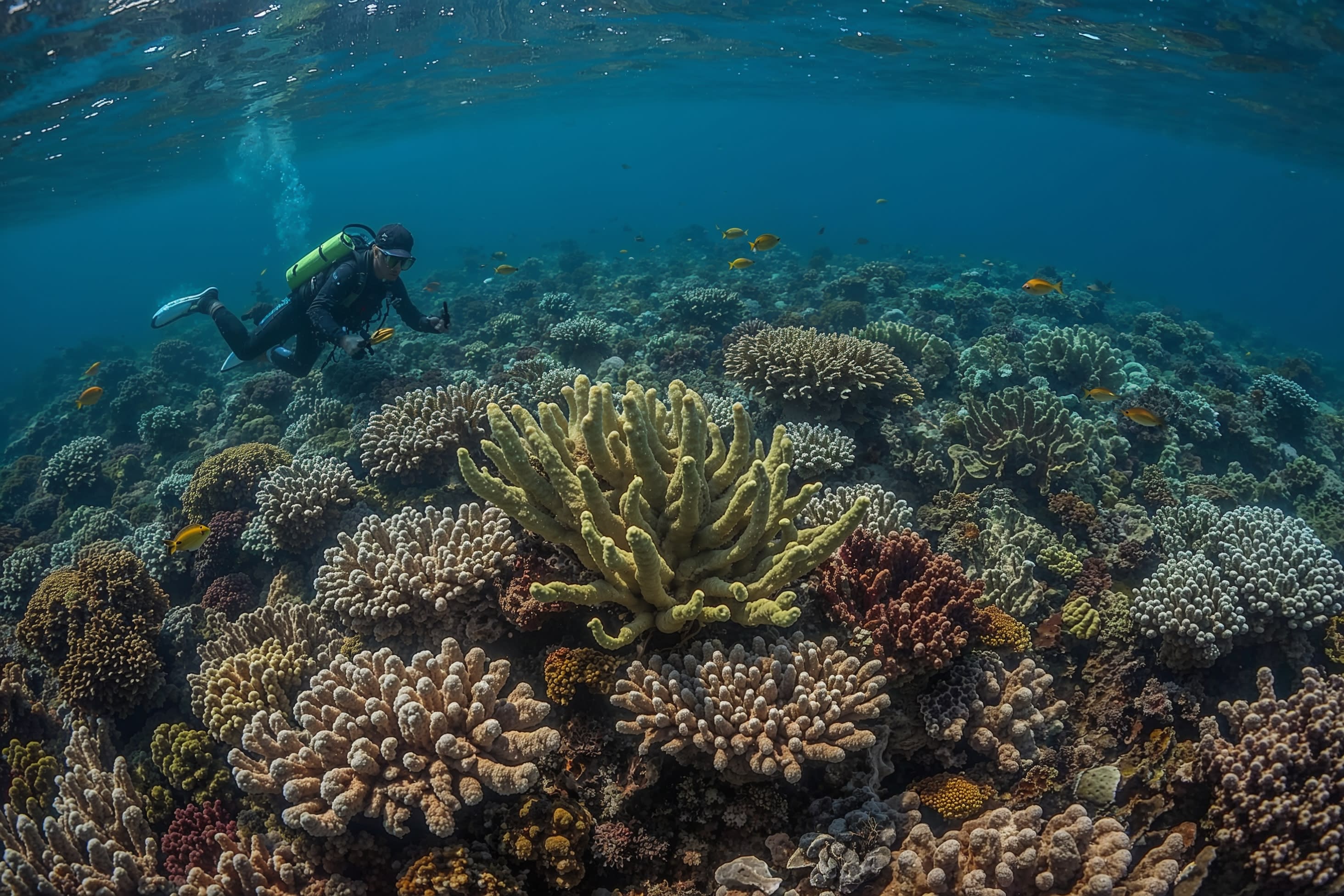
Innovative Technologies in Coral Reef Restoration
1. AI-Powered Robotics and 3D Printing
In Australia, Coral Maker, led by Dr. Taryn Foster, has partnered with Autodesk to develop AI-driven robots that automate the process of attaching nursery-grown coral fragments to artificial skeletons. This collaboration aims to scale up reef rehabilitation efforts significantly, with the potential to restore 250 acres of reefs annually, a substantial increase from the current average.
2. Portable Coral Nurseries
The Australian Institute of Marine Science (AIMS) is developing "ReefSeed," portable aquariums designed to propagate up to 100,000 young corals in remote areas. These containerized systems can be set up near beaches, drawing seawater and using independent power sources for filtration and temperature control. This innovation allows for large-scale coral propagation in locations previously inaccessible for restoration efforts.
3. Biodegradable Protective Structures
In South Florida, researchers have introduced the "Coral Fort," a biodegradable cage made from drinking straws, to shield laboratory-grown corals from predators like parrotfish. This method has increased coral survival rates from below 40% to over 90%. The cages dissolve after the juvenile corals have matured, eliminating the need for removal and reducing environmental impact.
4. Acoustic Enrichment
Scientists are employing acoustic enrichment by playing recordings of healthy reef sounds to attract coral larvae and fish to degraded areas. This technique enhances biodiversity and promotes coral growth by creating an inviting environment for marine life. Studies have shown that coral larvae are more likely to settle in areas where these sounds are present, accelerating the recovery of damaged reefs.
5. AI and Remote Sensing for Monitoring
The Australian Institute of Marine Science has developed an advanced remote sensing model using data from the Sentinel-2 satellite, validated with digital photos of reef areas. This model accurately maps habitats on the ocean floor, identifying locations where young corals have the highest chance to establish and thrive. Such technology aids in deciding which reef areas to protect or actively manage, ensuring effective restoration efforts.
6. Electrified Reefs
Electrified reefs, or biorocks, involve submerged metal structures that, when subjected to a low-voltage electric current, facilitate the deposition of minerals like calcium carbonate. This process accelerates coral growth and enhances their resilience to environmental stressors. Implemented in over 20 countries, electrified reefs have demonstrated increased coral growth rates and improved survival in challenging conditions.
7. AI-Powered Monitoring Systems
Project: CORaiL, an initiative in the Philippines, utilizes AI-powered systems to monitor fish populations and assess reef health. Underwater cameras equipped with AI algorithms detect and classify marine life, providing real-time data without disrupting the ecosystem. To date, the project has collected over 71,000 images, aiding researchers in making informed decisions for reef conservation.
These innovative technologies represent a beacon of hope for coral reef restoration. By integrating AI, robotics, and sustainable materials, scientists and conservationists are developing scalable solutions to preserve and rejuvenate these critical ecosystems.
Financial Mechanisms Supporting Reef Conservation
Debt-for-nature swaps have emerged as a significant mechanism in reef conservation financing. In August 2024, Indonesia and the United States finalized a $35 million agreement to protect Indonesia's coral reefs. This deal allows Indonesia to redirect funds originally allocated for debt repayment toward conservation efforts, focusing on areas like the Bird’s Head Seascape and the Lesser Sunda. The initiative aims to strengthen marine protected areas and support community livelihoods, demonstrating how financial instruments can be tailored to environmental objectives.
Insurance products are also being developed to safeguard coral reefs. In Mexico's Quintana Roo, a parametric insurance policy was established to provide rapid funding for reef restoration following hurricane damage. This policy ensures that funds are available immediately after a storm, facilitating prompt restoration activities and highlighting the protective value of healthy reefs for coastal communities.
Additionally, the concept of biodiversity credits is gaining traction as a means to finance conservation. These credits assign a monetary value to the preservation of biodiversity, allowing entities to invest in conservation projects as a form of offsetting their environmental impact. While still in the early stages, biodiversity credits hold promise for generating sustainable funding for reef conservation efforts.
These financial mechanisms represent a multifaceted approach to coral reef conservation, combining debt restructuring, insurance innovation, and market-based solutions to address the pressing need for sustainable funding in the face of climate change and other environmental challenges.
Community-Led Restoration Initiatives
In Hawaiʻi, the Kuleana Coral Restoration organization has been at the forefront of such initiatives. Recognizing the deep cultural significance of coral—referred to as 'ko‘a' in Hawaiian traditions—Kuleana has developed restoration methods that integrate indigenous management techniques with contemporary science. Their approach includes training local residents and Native Hawaiians in underwater coral restoration, fostering a sense of responsibility ('kuleana') towards the ocean. This initiative not only aims to restore coral reefs but also to empower communities by providing them with the skills and knowledge necessary for long-term stewardship.
Similarly, on the island of Molokai, the restoration of ancient fishponds is playing a crucial role in protecting coral reefs. Organizations like Ka Honua Momona, in partnership with the Coral Reef Alliance, are rehabilitating historic fishponds to reduce sediment runoff—a major threat to coral health. By removing invasive species, planting native vegetation, and engaging the community in monitoring efforts, these projects are reviving traditional practices that support both ecological and cultural resilience.
In Kenya, the Reel Kalifi project exemplifies the success of community-led conservation. Launched by NGOs Oceans Alive Foundation and Coral Guardian, the project involves local fishermen in establishing community conservation areas. These efforts have led to a remarkable 400% increase in fish populations and a 30% regrowth of coral, demonstrating the effectiveness of integrating local knowledge and participation in restoration initiatives.
These examples underscore the importance of community involvement in coral reef restoration. By combining traditional practices with scientific methods, and by empowering local communities, these initiatives not only restore vital ecosystems but also enhance cultural heritage and provide sustainable economic opportunities. As climate change continues to threaten coral reefs worldwide, such community-led efforts offer a hopeful and replicable model for conservation.
Global Collaborations and Policy Frameworks
In a significant move, the United States and Indonesia finalized a $35 million debt-for-nature swap in July 2024. Under this agreement, the U.S. forgave a portion of Indonesia's debt in exchange for the country's commitment to restoring and conserving its coral reefs. This initiative targets the Bird's Head Seascape and Lesser Sunda-Banda Seascape, areas renowned for their rich biodiversity. Such financial mechanisms exemplify how international partnerships can align economic incentives with environmental conservation goals.
The Global Fund for Coral Reefs (GFCR) has been instrumental in fostering collaborations that blend public and private financing to support coral reef conservation. By 2030, GFCR aims to support over 400 reef-positive businesses and sustainable financial mechanisms, enhancing the resilience of over 20 million community members and 3 million hectares of coral reefs. Their initiatives span various sectors, including sustainable fisheries, ecotourism, and pollution management, demonstrating a holistic approach to reef conservation.
On the policy front, the International Coral Reef Initiative (ICRI) has been pivotal in integrating coral reef conservation into national biodiversity strategies. In April 2024, ICRI released a guide to assist countries in incorporating coral reefs into their National Biodiversity Strategies and Action Plans (NBSAPs). This effort aligns with the Kunming-Montreal Global Biodiversity Framework, emphasizing the need for tailored strategies that address both international commitments and national priorities.
Community-led initiatives also play a crucial role in global collaborations. In the Mediterranean, for instance, local conservationists have been actively involved in cataloging and protecting Cladocora caespitosa corals. By measuring, recording, and assessing the health of coral colonies, these efforts contribute valuable data and foster community engagement in reef conservation.
These examples underscore the multifaceted approach required to address the challenges facing coral reefs. Through international treaties, financial mechanisms, policy frameworks, and grassroots initiatives, the global community is working collaboratively to ensure the survival and resilience of these vital ecosystems.
Challenges and Future Directions in Coral Reef Restoration
Escalating Ocean Temperatures
Rising sea temperatures pose a significant threat to coral restoration efforts. In the Florida Keys, record-high seawater temperatures in 2023 led to the death of over 75% of cultivated corals, including critical species like staghorn and elkhorn. This event underscores the vulnerability of restored corals to thermal stress.
Innovative Restoration Techniques
To combat these challenges, researchers are developing novel restoration methods. In South Florida, scientists have introduced biodegradable cages made from drinking straws to protect lab-grown corals from predators. This innovation has increased coral survival rates from below 40% to over 90%, demonstrating the potential of creative solutions in enhancing restoration success.
Community Engagement and Global Collaboration
Community involvement is crucial for the success of restoration projects. In the Mediterranean, initiatives led by local conservationists focus on cataloging and protecting native coral species, emphasizing the importance of participatory science.
Similarly, global collaborations, such as the "Reef Builders" documentary, highlight large-scale restoration efforts across multiple countries, showcasing the power of collective action.
Future Directions
Looking ahead, integrating resilience into restoration practices is paramount. A roadmap developed by coral scientists emphasizes the need for new partnerships and the testing of novel methods to enhance coral recovery and adaptation to environmental disturbances. This includes improving coral recruitment and developing materials to protect corals during vulnerable early life stages.
In summary, while coral reef restoration faces significant challenges due to climate change and other stressors, ongoing innovations and collaborative efforts provide hope for the future. By embracing new technologies and fostering community involvement, we can enhance the resilience and sustainability of these vital ecosystems.
Comments
Post a Comment